
Advanced EEG in Islamabad for Brain Activity Monitoring
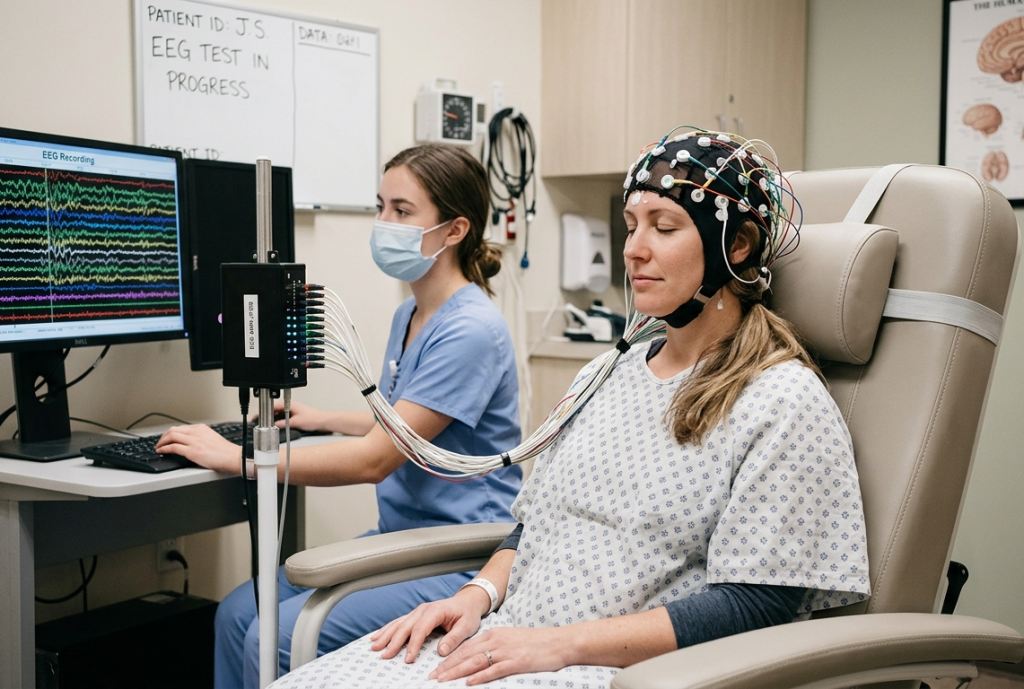
An EEG is one of the most valuable neurological investigations available for understanding how the brain is functioning electrically. ODC provides EEG testing in Islamabad in a calm and properly equipped clinical environment where every study is performed by trained technologists using a modern EEG machine and reviewed by an experienced neurologist who reports the findings in clinical language your referring doctor can act on.
Whether your neurologist has requested an eeg brain test to investigate a first seizure evaluate known epilepsy or assess unexplained episodes of altered awareness every study is handled with the same standard of technical care and clinical reporting. EEG for epilepsy diagnosis remains the most direct and non-invasive way to capture abnormal electrical discharges in the brain that correspond to seizure activity and the findings directly shape the management plan.
Trusted Centre for EEG Brain Testing in Islamabad
The quality of an EEG study depends on three things the technical standard of the equipment the skill of the technologist placing the electrodes and recording the study and the expertise of the neurologist interpreting the waveform patterns. A recording made with poor electrode contact or reviewed without deep neurological experience produces a report that is either inconclusive or potentially misleading at a moment when clinical accuracy matters enormously for the patient’s diagnosis and treatment. ODC treats every EEG as the neurologically significant investigation it is.
Neurologists and paediatricians who refer patients to ODC for electroencephalography receive EEG reports that are clear structured and written in clinical language that directly supports diagnostic and prescribing decisions. The eeg report documents background activity organisation amplitude and any paroxysmal discharges with their characteristics and clinical relevance described in full. The neurology specialists in ODC can provide clinical consultation alongside EEG testing when a combined neurological review is needed.
Modern Equipment
Every EEG study runs on a modern digital EEG machine that captures brain wave patterns with the clarity and precision expert demands.
All Ages Welcome
EEG testing is available for adults and children including an eeg test for kids with the patience and care that younger patients need.
Neurologist Reporting
Every EEG recording is reviewed and reported by experienced neurologist whose findings give your referring doctor diagnostic clarity.
Clear EEG Price
The EEG test price is confirmed before every appointment is booked. No charges are added after the recording is completed.
Easy Scheduling
EEG appointments run Monday to Saturday with morning and evening availability so attendance fits the schedule of working patients.
Completely Safe
An EEG uses no radiation and involves no needles making it completely safe and painless for patients of every age including young elderly.
Your EEG Test From Preparation to Report
Preparing correctly for an EEG makes the recording smoother and helps produce a higher-quality study. The eeg procedure begins with clean hair that is free of oils gels hairspray and other products because the electrodes need to make direct contact with the scalp for the recording to be technically valid. Can i eat before eeg test is one of the most common questions patients ask before their appointment and the answer is yes patients should eat normally before attending because low blood sugar from fasting can affect brain wave patterns and introduce artefact into the recording. Coffee and other stimulants are generally advised against on the morning of the test because they can alter alertness levels in ways that affect the clinical interpretation of background activity.
On the day of the appointment small cup electrodes are applied to specific positions on the scalp using a water-based conductive gel and secured lightly in place. The patient sits or lies comfortably while the recording runs for the required duration. How long does an eeg test take depends on the type of study a standard routine EEG typically runs for twenty to forty minutes including electrode preparation and recording time. An ambulatory eeg test is a longer study where the patient wears a portable recording device and goes about their normal daily activities for a defined period allowing the EEG to capture brain wave activity across a longer time window that may include sleep or spontaneous episodes not present during a short routine study.
Clinical Conditions an EEG Helps Diagnose
EEG for brain disorders extends beyond epilepsy to include the assessment of encephalopathy in confused or drowsy patients evaluation of sleep disorders including narcolepsy and assessment of brain function in patients with altered consciousness or suspected non-convulsive status epilepticus. In paediatric neurology EEG is used to classify epileptic syndromes in children with seizures and to monitor treatment response over time. Every one of these clinical applications depends on a recording that is technically clean and interpreted by a neurologist with specialist electroencephalography experience.
Understanding Normal and Abnormal EEG
Understanding the difference between normal eeg and abnormal eeg findings helps patients make sense of the report before they see their neurologist. A normal eeg shows organised background activity appropriate for the patient’s age with the expected dominant frequencies in the relevant brain regions and no epileptiform discharges. The reporting neurologist describes the findings systematically and provides a clinical interpretation that links the EEG pattern to the patient’s presenting symptoms. ODC’s laboratory in Islamabad handles supporting blood tests including antiepileptic drug levels alongside neurological investigations.
How EEG Findings Shape Epilepsy
EEG for epilepsy diagnosis is the most direct non-invasive window into the brain’s electrical behaviour during interictal periods between seizures and in some cases during actual seizure events captured on the recording. The neurological test eeg guides epilepsy management in several specific ways it helps classify whether the seizure disorder is generalised or focal which determines the class of antiepileptic medication.The EEG findings inform every major decision in epilepsy care from first diagnosis through to long-term monitoring and medication adjustment. Visit specialist doctors for a combined neurology consultation alongside your EEG referral.
EEG Test Price and Booking in Islamabad
The eeg test price in ODC islamabad is confirmed before any appointment is finalised and covers the complete recording session including electrode preparation and neurologist reporting. Whether the referral is for a standard routine EEG an ambulatory study or a video EEG the full fee is stated clearly at the point of booking with no additions applied on the day of the test. Patients searching for an eeg test near me open now will find that ODC provides appointments Monday to Saturday from 11:00 AM to 8:00 PM. Book through contact us for current pricing and to confirm a session at a time that works for the patient without long waiting periods for the appointment date.
Give Your Neurologist the Brain Wave Data They Need
A seizure that has never been properly investigated a spell of altered awareness that happened once but has left the patient and their doctor wondering about the cause or a child whose episodes at school have raised concern about epilepsy all of these are situations where an EEG provides the neurological evidence that changes the clinical conversation. Can eeg detect brain problems is a question with a clear answer yes it detects the electrical signature of epilepsy encephalopathy sleep disorders and focal brain dysfunction directly from the brain wave recording. Continuous eeg monitoring in longer ambulatory or video formats extends this detection capability to events that a routine session might miss entirely. ODC’s specialist neurology team and full radiology service support every EEG referral. Book your EEG test in Islamabad today and get the neurological clarity your doctor has been looking for.
Our Location
Appointment
What Our Patients Say About ODC
The reputation ODC holds as a neurological testing centre in Islamabad has grown through consistent and patient-centred care rather than through promotional claims. Patients who came for an EEG arrived with undiagnosed seizures unexplained neurological episodes or a referral from their neurologist and left with a clear and structured report that gave their doctor the brain wave findings needed to move the clinical conversation forward. The fee was confirmed before they arrived. The recording was conducted calmly and professionally. The report was ready when the referring neurologist needed it to make the next management decision. Whether the patient was an adult investigating a first seizure or a child whose episodes needed proper characterisation every appointment received the same attentive and expert care.
Trustindex verifies that the original source of the review is Google. I visit odc very nice staff and helpful to the patient in any activity in the odcPosted on GoogleTrustindex verifies that the original source of the review is Google. very well staff good environment recommendedPosted on GoogleTrustindex verifies that the original source of the review is Google. Good servicesPosted on GoogleTrustindex verifies that the original source of the review is Google. One of the best diagnostic in Islamabad highly professional doctor and advance lab good staff and clean environmentPosted on GoogleTrustindex verifies that the original source of the review is Google. Good and neat environment good facilitiesPosted on GoogleTrustindex verifies that the original source of the review is Google. Friendly helping staff I'm so satisfied with service given to us.They are the best.Posted on GoogleTrustindex verifies that the original source of the review is Google. Good servicesPosted on GoogleTrustindex verifies that the original source of the review is Google. Good centerPosted on GoogleTrustindex verifies that the original source of the review is Google. Best staff and lab very happyPosted on GoogleTrustindex verifies that the original source of the review is Google. Nice and efficient staff
Frequently Asked Questions
What is an EEG test used for?
An EEG test is used to assess the electrical activity of the brain and is most commonly ordered for epilepsy diagnosis seizure characterisation and antiepileptic drug monitoring.
What is the cost of an EEG test in Islamabad?
The eeg test price in islamabad at ODC is confirmed before any appointment is booked and covers the complete recording session including neurologist reporting.
Can an EEG detect brain problems?
Yes. An EEG detects electrical abnormalities in the brain including epileptiform discharges that indicate seizure disorder background slowing that suggests encephalopathy and focal abnormalities pointing toward structural or functional brain pathology in a specific region.
Is an EEG test painful?
No. An EEG is entirely painless. Small cup electrodes are applied to the scalp using conductive gel and held in place by a lightweight cap or paste. There are no needles no electric shocks and no discomfort involved at any point during the recording.
What is a normal EEG result?
A normal eeg result shows well-organised background brain wave activity appropriate for the patient’s age with dominant alpha activity in the posterior regions during relaxed wakefulness and no epileptiform discharges focal slowing or abnormal patterns.