
Advanced MRCP in Islamabad for Clear Imaging
Most patients reach a hepatobiliary investigation after weeks of upper abdominal pain that blood tests have flagged but not fully explained. An MRCP scan provides biliary and pancreatic duct imaging that answers those questions without sedation, scope insertion or radiation. When the clinical picture points toward the pancreas this is the investigation that gives the anatomy a voice.
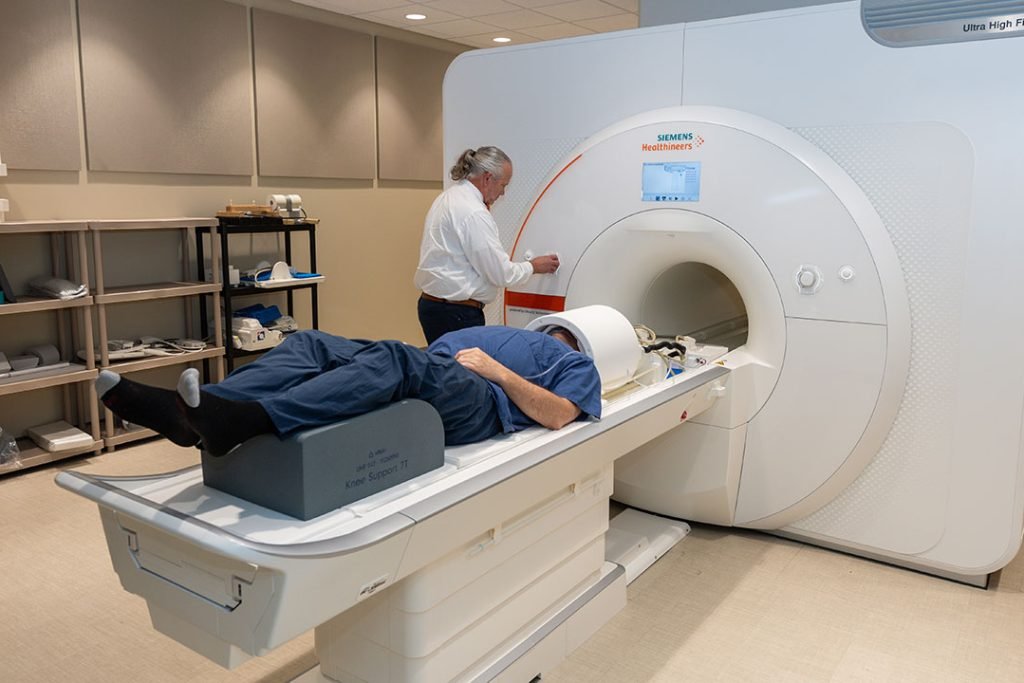
ODC offers MRCP MRI for patients referred with suspected biliary obstruction, gallstones within the ductal system, pancreatic pathology or unexplained cholestatic liver disease. The MRI MRCP procedure is performed on high-specification equipment by trained imaging staff and every scan is reported by an experienced radiologist.
Most Trusted MRCP Scan Centre in Islamabad
Magnetic Resonance Cholangiopancreatography is a technically specific MRI application and its full diagnostic value depends almost entirely on the quality of the equipment producing the images and the expertise of the radiologist reading them carefully. Ductal structures are narrow and their anatomical detail is unforgiving of poor image resolution. In diagnostic radiology the real difference between a scan that answers the clinical question and one that merely documents a study is determined at the moment images are acquired and then reported.
Patients referred for hepatobiliary system imaging often carry anxiety about what the scan might reveal as much as genuine uncertainty about what the procedure involves. Both deserve an honest answer. MRI test fee for MRCP at ODC is confirmed before any appointment is finalised so the cost never becomes an additional source of uncertainty on the day. Every step from booking through to report collection is handled with clear communication and the same clinical standard regardless of the referral source.
Precise MRI Equipment
High-field MRI equipment delivers sharp T2 weighted ductal sequences so every MRCP scan shows biliary and pancreatic detail clearly.
Full Ductal Coverage
The complete biliary tree, common bile duct, pancreatic duct and intrahepatic ducts are all assessed in a single MRCP MRI session.
Specialist Reporting
Every MRCP scan is reviewed by a radiologist experienced in hepatobiliary imaging whose report supports diagnosis and plan.
Confirmed MRI Fee
MRI test fee for MRCP is stated clearly before booking with no revisions or additions at any point from enquiry to report collection.
Easy Scheduling
Appointments run Monday to Saturday from 11 AM to 8 PM with morning and evening slots to accommodate urgent referrals and routine bookings equally.
Safe Radiation Free Scan
MRCP uses no ionising radiation and requires no scope or contrast injection making it safe and well tolerated for most patients.
What Happens During an MRCP Scan
The MRCP procedure begins with a patient screening questionnaire covering metallic implants and device history as is standard for all MRI-based investigations. You will be asked to fast for at least four to six hours before your appointment because an empty stomach and gallbladder produce the clearest possible ductal imaging by reducing background fluid in the surrounding gastrointestinal tract. Gastrointestinal imaging of this specific type requires biliary and pancreatic ducts to be clearly distinguishable from adjacent fluid-containing structures and adequate fasting beforehand is what makes that level of clarity possible.
Once the MRCP scan begins you will be asked to follow brief breath-hold instructions at specific points during the acquisition. These last only a few seconds each time and the radiographer will guide you through each one clearly. The MRI imaging system uses heavily T2-weighted sequences that make fluid in the bile ducts and pancreatic duct appear bright against surrounding tissue producing the detailed ductal map your radiologist needs to assess for strictures, filling defects, dilatation or mass effect. The full scan typically takes between twenty and forty minutes and the radiologist report is prepared and made available promptly after the session ends.
MRCP Full Form in Medical
MRCP full form in medical terminology is Magnetic Resonance Cholangiopancreatography and understanding precisely what that name means helps patients appreciate exactly what the scan is designed to do. The word cholangiopancreatography breaks into its components: cholangio refers to the bile ducts, pancreato to the pancreatic ductal system and graphy to the detailed imaging of those specific structures. MRI-based map of the entire biliary tree and pancreatic duct system.
How MRCP Compares to ERCP
The most clinically important comparison involving the MRCP medical abbreviation in a purely diagnostic context is MRCP vs ERCP. ERCP stands for Endoscopic Retrograde Cholangiopancreatography and involves a flexible scope passed through the mouth into the duodenum to inject contrast directly into the ductal system. It is both diagnostic and therapeutic but carries risks including pancreatitis, perforation and the need for sedation. MRCP carries none of those procedural risks.
MRCP Scan vs MRI Scan
The MRI vs MRCP difference is entirely straightforward. A standard MRI of the abdomen produces images of organ parenchyma, masses and soft tissue structures in detail. MRCP scan vs MRI scan differs in that MRCP uses specialised T2-weighted sequences that specifically highlight fluid-containing ductal structures and fully suppress the surrounding tissue signal. Our radiology department works in coordination with our laboratory services so when findings point toward further investigation the follow-up pathway is arranged without adding unnecessary delays to your care.
Transparent MRCP Pricing
MRI test fee for MRCP is stated clearly before any appointment is confirmed and covers the complete scan and the full radiologist report without any additions whatsoever. Radiology diagnostics of this type involve specialist equipment, dedicated imaging sequences and expert reporting and the fee reflects the true quality of all three elements. Our laboratory and radiology services apply the same transparent pricing principle across every investigation. All booking details are on the contact page.
A Note on MRCP Meaning and Why It Matters Before You Search
Our Location
Appointment
What Our Patients Say About ODC
Trustindex verifies that the original source of the review is Google. I visit odc very nice staff and helpful to the patient in any activity in the odcPosted on GoogleTrustindex verifies that the original source of the review is Google. very well staff good environment recommendedPosted on GoogleTrustindex verifies that the original source of the review is Google. Good servicesPosted on GoogleTrustindex verifies that the original source of the review is Google. One of the best diagnostic in Islamabad highly professional doctor and advance lab good staff and clean environmentPosted on GoogleTrustindex verifies that the original source of the review is Google. Good and neat environment good facilitiesPosted on GoogleTrustindex verifies that the original source of the review is Google. Friendly helping staff I'm so satisfied with service given to us.They are the best.Posted on GoogleTrustindex verifies that the original source of the review is Google. Good servicesPosted on GoogleTrustindex verifies that the original source of the review is Google. Good centerPosted on GoogleTrustindex verifies that the original source of the review is Google. Best staff and lab very happyPosted on GoogleTrustindex verifies that the original source of the review is Google. Nice and efficient staff
Frequently Asked Questions
What is MRCP used for?
MRCP is used to image the bile ducts and the pancreatic ductal system non-invasively. It identifies gallstones within the biliary tree, ductal strictures, cholangitis, primary sclerosing cholangitis, pancreatic duct dilatation and structural abnormalities contributing to cholestatic jaundice or unexplained upper abdominal symptoms.
How much does an MRCP scan cost in Islamabad?
MRI test fee for MRCP at ODC is communicated clearly before any appointment is confirmed and covers the complete scan and radiologist report in full. The exact figure depends on the protocol and is stated upfront with no additions on the day.
What is the MRCP procedure like?
MRCP procedure is a non-invasive MRI-based investigation requiring fasting beforehand. It uses breath-hold sequences during imaging and involves no scope, no injected contrast and no sedation. An MRCP MRI session typically takes between twenty and forty minutes.
How long does an MRI take?
MRCP vs ERCP is the most common clinical comparison for this investigation. MRCP is non-invasive and diagnostic with no procedural risk. ERCP is both diagnostic and therapeutic but requires sedation and carries risks including pancreatitis and perforation.