

Complete Blood Picture with Peripheral Smear in Islamabad
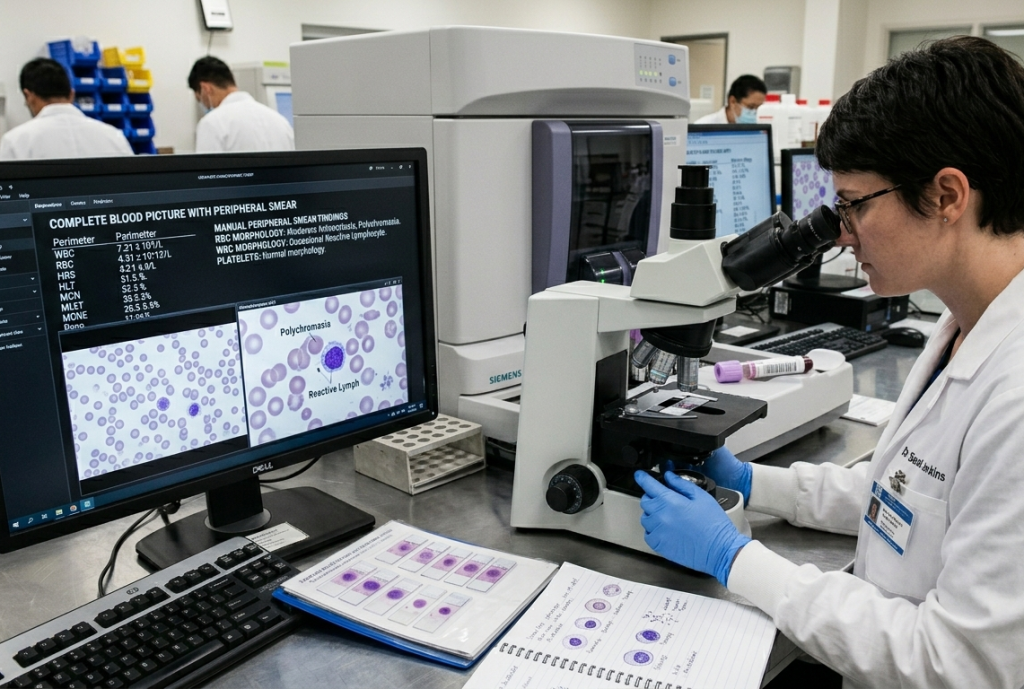
A complete blood picture with peripheral smear goes beyond what a standard blood count delivers. ODC processes this investigation in Islamabad through a validated haematology pathway that examines blood cells both numerically and morphologically. The peripheral blood smear adds microscopic analysis of actual cell appearance to quantitative data, capturing abnormalities in shape, size and maturity that automated analysers cannot characterise on their own.
ODC provides CBC with peripheral smear covering red cell morphology, white cell differential and platelet assessment in one combined haematology report. When a physician needs more than numbers, the peripheral blood film gives the reporting haematologist findings that explain abnormal counts definitively. The medical laboratory in Islamabad handles this test with the precision clinical haematology demands.
Trusted Peripheral Smear Testing in Islamabad
Peripheral blood smear examination is a skill-dependent investigation where the result quality depends on both slide preparation techniques and the expertise of the examiner. A poorly prepared film creates artefacts that mimic genuine cellular abnormalities and mislead clinical decisions. ODC prepares peripheral blood films using a standardised spreading and staining method ensuring even cell distribution, correct staining intensity and a reading zone that reflects the patient’s true circulating blood cell population without any processing distortion affecting the morphological findings.
Physicians who request complete blood picture with peripheral smear through ODC receive a report describing red cell morphology, white cell differential with abnormal forms noted, platelet morphology and a haematologist summary contextualising every finding for the clinical question. CBC with peripheral smear price is confirmed before the appointment with no additions afterward. The complete blood picture service complements peripheral smear when full haematology coverage is needed alongside the morphological examination.
Standardised Prep
Blood films use controlled preparation ensuring accurate cell spread and true circulating blood representation daily safely.
Morphology Expertise
Peripheral smear examination is performed by trained haematologists identifying findings automated analysers cannot detect.
Complete Coverag
CBC with peripheral smear covers red cell indices white cell differential platelet count and morphology in one complete diagnostic result.
Honest Fees
Peripheral blood picture test price is confirmed before every appointment with the full fee stated clearly and no charges added after.
Prompt Results
Peripheral smear results are reported without delay so physicians receive complete haematological findings without any delays.
Clinical Safety
Sample collection is performed by trained phlebotomy staff following infection control and patient safety protocols in managed laboratory.
What Happens During a CBC with Peripheral Smear Test
The complete blood picture with peripheral smear begins with a venous blood sample collected into an EDTA anticoagulant tube that preserves cell morphology without distortion during processing. No fasting or special preparation is required before attending. In the laboratory a small drop of fresh blood is placed on a clean glass slide and spread into a thin even film. This technique requires precise angle and speed to produce a feathered edge where red cells lie individually without overlap. The slide is air-dried and stained with a Romanowsky stain such as Leishman or Giemsa which colours different cell types distinctively allowing internal structures to be examined clearly under the microscope during the peripheral blood smear procedure.
Once stained, the peripheral blood film is examined under light microscopy at low magnification to assess overall cell distribution then at high magnification oil immersion to study individual cell morphology. The haematologist evaluates red cell size, shape, colour and structure, classifies white cells across five subtypes, notes immature forms such as blasts or band neutrophils, and estimates platelet number and size. Peripheral blood smear normal values include uniformly sized red cells, a differential within reference ranges and adequate platelets without giant forms. All deviations are described in the peripheral blood smear report with morphological detail guiding the physician in detail.
What Diseases Can a Peripheral Smear Detect
The peripheral blood smear procedure is ordered when automated analysis cannot confirm a suspected diagnosis. Unexplained anaemia is the most common indication as the peripheral film identifies anaemia type through red cell morphology. Iron deficiency produces microcytic hypochromic cells. Megaloblastic anaemia produces macrocytes and hypersegmented neutrophils. Haemolytic anaemia produces schistocytes. Malaria causes parasitised red cells visible on the slide. Leukaemia produces blast cells. What diseases a peripheral smear detects spans nutritional deficiencies, infections and haematological malignancies.
What If a Peripheral Smear Test Is Positive
Understanding what a peripheral smear test positive means requires clarity on how results are reported. Unlike biochemistry tests, peripheral blood smear examination produces a descriptive morphological report. Abnormal findings might describe target cells suggesting thalassaemia, teardrop cells suggesting myelofibrosis or a left shift pointing toward bacterial sepsis. Each morphological finding carries specific differential diagnoses in the haematologist’s report. The blood culture test is often ordered alongside when the smear raises suspicion of active bloodstream infection. Peripheral smear interpretation is always correlated with CBC findings.
Why CBC and Peripheral Smear Work Better Together
The CBC component provides the quantitative foundation that morphological examination expands upon. A complete blood count generates haemoglobin, packed cell volume, red cell indices, white cell count, platelet count and automated differential. When the analyser flags abnormal populations the peripheral blood film explains what the machine cannot characterise alone. This combination makes CBC with peripheral smear more informative than a standalone count. For patients whose smear raises inflammatory concerns the colour doppler and ultrasound are available. Peripheral smear review also helps detect early cellular abnormalities.
How to Book Your Peripheral Blood Film Test
Peripheral blood picture test price at ODC is confirmed before any appointment covering the blood count, film preparation, staining, microscopic examination and full haematologist report in one stated fee. Walk-in collection runs Monday to Saturday from 11:00 AM to 8:00 PM. Patients needing supporting tests such as an APTT coagulation test or blood group can combine samples in one visit. Background on ODC standards is on the about us page and queries go to contact us for prompt confirmation before attendance. Contact the team through contact us for current pricing and same-day booking confirmation.
What Happens After Your Peripheral Blood Smear Result
For some patients a complete blood picture with peripheral smear begins a longer haematological workup. When the peripheral blood film reveals blast cells suggestive of haematological malignancy the physician proceeds to bone marrow examination for full characterisation. When parasitised red cells appear in a febrile patient from an endemic area malaria antigen testing becomes the immediate next step. Patients with haemolytic anaemia morphology require further testing to direct treatment. ODC’s specialist doctors support patients through follow-up stages when peripheral smear findings need clinical correlation and management. The laboratory handles the peripheral blood picture and supporting investigations to complete the pathway.
Our Location
Appointment
How Patients Describe Their ODC Experience
Trustindex verifies that the original source of the review is Google. I visit odc very nice staff and helpful to the patient in any activity in the odcPosted on GoogleTrustindex verifies that the original source of the review is Google. very well staff good environment recommendedPosted on GoogleTrustindex verifies that the original source of the review is Google. Good servicesPosted on GoogleTrustindex verifies that the original source of the review is Google. One of the best diagnostic in Islamabad highly professional doctor and advance lab good staff and clean environmentPosted on GoogleTrustindex verifies that the original source of the review is Google. Good and neat environment good facilitiesPosted on GoogleTrustindex verifies that the original source of the review is Google. Friendly helping staff I'm so satisfied with service given to us.They are the best.Posted on GoogleTrustindex verifies that the original source of the review is Google. Good servicesPosted on GoogleTrustindex verifies that the original source of the review is Google. Good centerPosted on GoogleTrustindex verifies that the original source of the review is Google. Best staff and lab very happyPosted on GoogleTrustindex verifies that the original source of the review is Google. Nice and efficient staff
Frequently Asked Questions
What is a CBC peripheral smear test?
A CBC peripheral smear test combines a complete blood count that measures cell populations numerically with a peripheral blood film examination where a trained haematologist studies the actual appearance of blood cells under a microscope.
What is the cost of CBC with peripheral film in Islamabad?
CBC with peripheral smear price at ODC is confirmed before the appointment covering the complete blood count, blood film preparation, staining, microscopic examination and the full haematologist report in one clearly stated fee.
What is a peripheral blood smear or blood picture?
A peripheral blood smear or blood picture is a glass slide prepared from a small drop of venous blood, stained to colour different cell types, and examined under a microscope by a trained haematologist.
What diseases can a peripheral smear detect?
A peripheral smear can detect iron deficiency anaemia, megaloblastic anaemia, haemolytic anaemia, malaria, leukaemia, lymphoma, thalassaemia, myelofibrosis, sepsis-related left shift, thrombocytopenia, platelet abnormalities and many other.
What if a peripheral smear test is positive?
A positive or abnormal peripheral smear result means the haematologist has identified cells that deviate from normal morphology. The report describes the specific abnormality found and lists the differential diagnoses it points toward.