

Efficient Blood Group Testing in Islamabad for Health Records
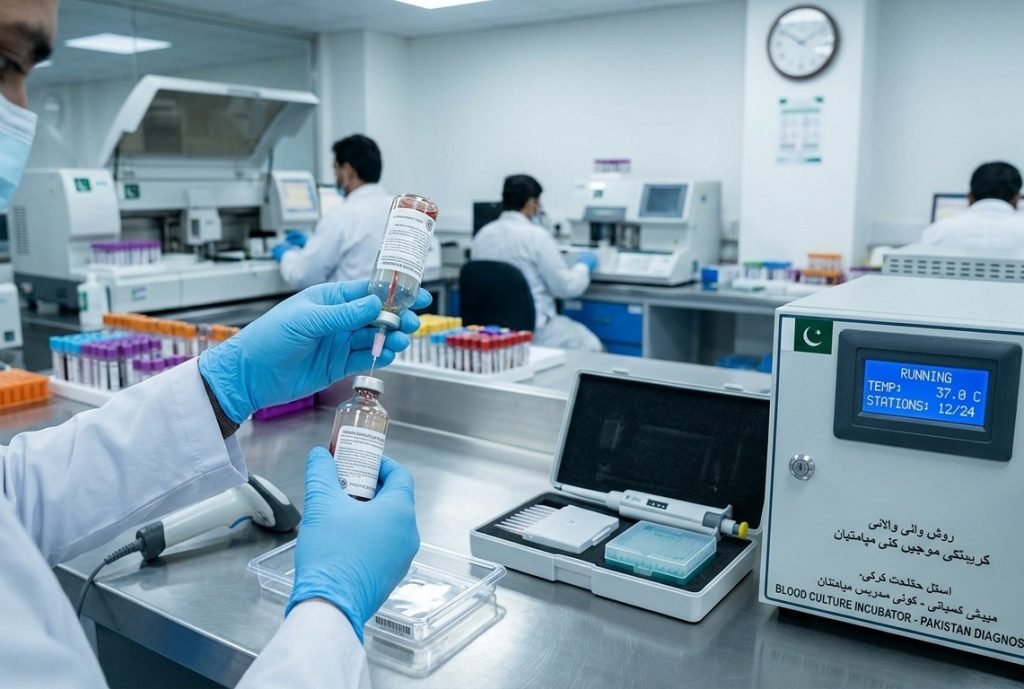
Persistent high fever, rigors that return despite treatment, a wound infection that is not responding to the antibiotics already prescribed these are the clinical moments when a blood culture becomes the most important test a doctor can order. Bloodstream infections caused by bacteria or fungi are serious and potentially life-threatening conditions where guesswork in antibiotic selection carries real consequences.
ODC processes blood culture tests in Islamabad through a validated microbiology workflow covering aerobic blood culture, anaerobic blood culture, and the full blood culture and sensitivity panel that confirms which antibiotics will and will not work against the isolated organism. Every sample goes through a controlled incubation process, and the blood culture report is prepared and communicated to the referring physician promptly.
Trusted Blood Culture Microbiology in Islamabad
Microbiology testing is particularly unforgiving of pre-analytical errors. A blood culture collected without proper skin antisepsis introduces environmental contaminants that produce false-positive results and send a clinical team down the wrong treatment path. Insufficient blood volume in the culture bottles reduces the sensitivity of detection and risks missing a true bacteraemia. Sample timing relative to fever spikes and antibiotic administration affects the likelihood of capturing the organism before it is suppressed. Aerobic and anaerobic blood culture bottles are filled with the correct blood volumes.
Physicians who send blood culture and sensitivity tests through ODC receive a report that goes beyond confirming growth or no growth. Blood culture test price in Islamabad is confirmed before the appointment so there are no billing issues after sample submission. The microbiology and laboratory services operate under the same quality standards as every other department. For clinical questions that go beyond laboratory findings, specialist doctors are available for consultation. Blood culture test price in Islamabad is confirmed before the appointment.
Sterile Technique
Blood culture collection follows strict antisepsis protocols and correct volume filling of aerobic and anaerobic culture to ensure results.
Reliable Detection
Samples are processed through a continuously monitored incubation system that detects bacterial and fungal growth automatically.
Targeted Results
Every positive blood culture is followed by a complete antibiotic sensitivity panel so the prescribing physician has organism-specific guidance.
Transparent Pricing
Blood culture test price is confirmed before any appointment. Aerobic and anaerobic paired culture pricing are communicated.
Fast Delivery
Blood culture reports are released as soon as growth is detected and sensitivity testing is complete. Referring physicians are notified without delay.
Controlled Environment
Every blood culture sample is collected by trained staff in a clean clinical environment following infection control protocol standards.
How the Blood Culture Test Works Step by Step
Before a blood culture is collected, the skin over the venepuncture site is cleaned thoroughly with an antiseptic solution and allowed to dry completely. This step is not optional skin flora is the most common source of blood culture contamination, and skipping proper antisepsis is the single most preventable cause of false-positive results. The phlebotomist collects the blood sample using a sterile needle and injects the required volume directly into both an aerobic blood culture bottle and an anaerobic blood culture bottle without allowing the blood to be exposed to the air in between. The aerobic bottle supports the growth of oxygen-dependent organisms while the anaerobic bottle supports organisms that cannot survive in oxygen.
Once in the laboratory, the blood culture bottles are loaded into a continuously monitored incubation system that detects microbial growth by measuring carbon dioxide production a byproduct of bacterial metabolism. When a bottle signals positive, the laboratory proceeds immediately to a Gram stain of the broth and reports the preliminary finding to the requesting physician before the full identification is complete. This preliminary Gram stain result telling the physician whether the organism is gram-positive or gram-negative, and whether it is a cocci or a rod allows empirical antibiotic therapy to be adjusted immediately rather than waiting for the final culture identification. Full organism testing are completed over the following 24 to 48 hours.
Why Doctors Order a Blood Culture Test
Understanding why a blood culture test is done helps both patients and referring physicians use this investigation at the right point in a clinical episode. The primary indication is suspected bacteraemia or fungaemia the presence of bacteria or fungi in the bloodstream. Clinically this presents as high fever with rigors, a sudden drop in blood pressure, an elevated heart rate without a clear source, or a patient who deteriorates unexpectedly despite treatment for a localised infection. Blood culture and sensitivity testing is the investigation that turns that clinical suspicion into a definitive microbiological answer.
What a Positive Blood Culture Means
A positive blood culture is one of the most clinically significant laboratory results a physician can receive because it confirms that a living organism has been isolated from a patient’s bloodstream. A positive result for a recognised pathogen such as Staphylococcus aureus, Streptococcus pneumoniae, Escherichia coli, or Candida species always requires immediate clinical action because none of these organisms exist in the blood under normal circumstances. For specialist clinical review and management support, ODC’s medicine allied team provides physician-level consultation for complex infectious presentations.
Two Types of Blood Culture and Why Both Matter
Blood culture testing uses two distinct bottle types because the organisms that cause bloodstream infections are not all the same. Aerobic blood culture bottles support the growth of organisms that require oxygen gram-positive and gram-negative bacteria that are the most common causes of bacteraemia. Anaerobic blood culture bottles support organisms that either cannot tolerate oxygen or grow better without it, including Bacteroides species and Clostridium species. For broader radiology services including vascular imaging, the radiology department handles all relevant investigations alongside laboratory testing.
Blood Culture Test Price in Islamabad
Blood culture test price in Islamabad at ODC is confirmed before any appointment is finalised, covering sample collection, incubation, organism identification, and the full antibiotic sensitivity panel in one stated fee. There are no additional charges added after the sample is collected. Walk-in sample collection is available Monday to Saturday from 11:00 AM to 8:00 PM. The about us page provides background on the diagnostic standards ODC maintains across all departments. Any questions about preparation, timing of blood culture collection relative to fever spikes, or report turnaround can be directed to the team through the contact us page.
Follow-Up Testing After a Blood Culture Result
For some patients a single blood culture test is the beginning of a longer clinical pathway rather than a one-time investigation. Patients who test positive and are confirmed with an active bloodstream infection will typically be assessed for the source of infection and started on a targeted antibiotic course based on the blood culture and sensitivity report. Patients who remain in higher-risk environments such as those with indwelling devices or immunosuppression may need periodic repeat testing even after an initial course is completed. ODC’s specialist clinical team supports patients through every stage of the infection management pathway. The laboratory handles both the initial diagnostic blood culture and all follow-up sensitivity and microbiology testing required throughout the treatment course.
Our Location
Appointment
What Patients Say About ODC
The confidence physicians and patients place in ODC for blood culture testing has been built through consistent microbiological accuracy rather than promotional claims. Patients who attended for blood culture and sensitivity testing arrived with fever, clinical deterioration, or a suspected bloodstream infection and left with a sample collected by trained staff who understood the pre-analytical requirements of the test. The blood culture report reached the referring physician promptly. The sensitivity results were complete and clinically actionable. Blood culture test price was confirmed before the appointment without any additions afterward.
Trustindex verifies that the original source of the review is Google. I visit odc very nice staff and helpful to the patient in any activity in the odcPosted on GoogleTrustindex verifies that the original source of the review is Google. very well staff good environment recommendedPosted on GoogleTrustindex verifies that the original source of the review is Google. Good servicesPosted on GoogleTrustindex verifies that the original source of the review is Google. One of the best diagnostic in Islamabad highly professional doctor and advance lab good staff and clean environmentPosted on GoogleTrustindex verifies that the original source of the review is Google. Good and neat environment good facilitiesPosted on GoogleTrustindex verifies that the original source of the review is Google. Friendly helping staff I'm so satisfied with service given to us.They are the best.Posted on GoogleTrustindex verifies that the original source of the review is Google. Good servicesPosted on GoogleTrustindex verifies that the original source of the review is Google. Good centerPosted on GoogleTrustindex verifies that the original source of the review is Google. Best staff and lab very happyPosted on GoogleTrustindex verifies that the original source of the review is Google. Nice and efficient staff
Frequently Asked Questions
What is a blood culture test used for?
A blood culture test is used to detect the presence of bacteria or fungi in the bloodstream. It identifies the specific organism causing a bloodstream infection and is paired with antibiotic sensitivity testing to guide targeted treatment.
What is the cost of a blood culture test in Islamabad?
Blood culture test price at ODC is confirmed before the appointment. The stated fee covers sample collection, incubation, organism identification, and the antibiotic sensitivity panel. There are no additional charges after the sample is collected.
What is a normal blood culture result?
A normal blood culture result means no bacterial or fungal growth was detected after the incubation period. This is reported as no growth after a set number of days, typically five days for most standard blood culture protocols, confirming no organism was present in the blood sample at the time of collection.
What shows up in a blood culture?
A blood culture can grow any bacterium or fungus that is present in the bloodstream at the time of collection. Common organisms detected include Staphylococcus aureus, Streptococcus species, Escherichia coli, Klebsiella pneumoniae.
What happens if a blood culture is positive?
A positive blood culture means a living organism has been isolated from the bloodstream. The laboratory proceeds to full identification and antibiotic sensitivity testing.